Content Wars Chapter 5: Dedicated Moms to Factory Workers
How Wartime Propaganda Transformed American Families and the Workforce Forever
1.10.2025
The Call to Arms: Women Enter the Factory Floor
During World War II, an unprecedented shift occurred in American society. As millions of men deployed overseas to fight in the war, the nation faced a critical labor shortage in factories producing essential war materials. The solution came through one of history's most successful propaganda campaigns—convincing women to leave their homes and enter the industrial workforce.
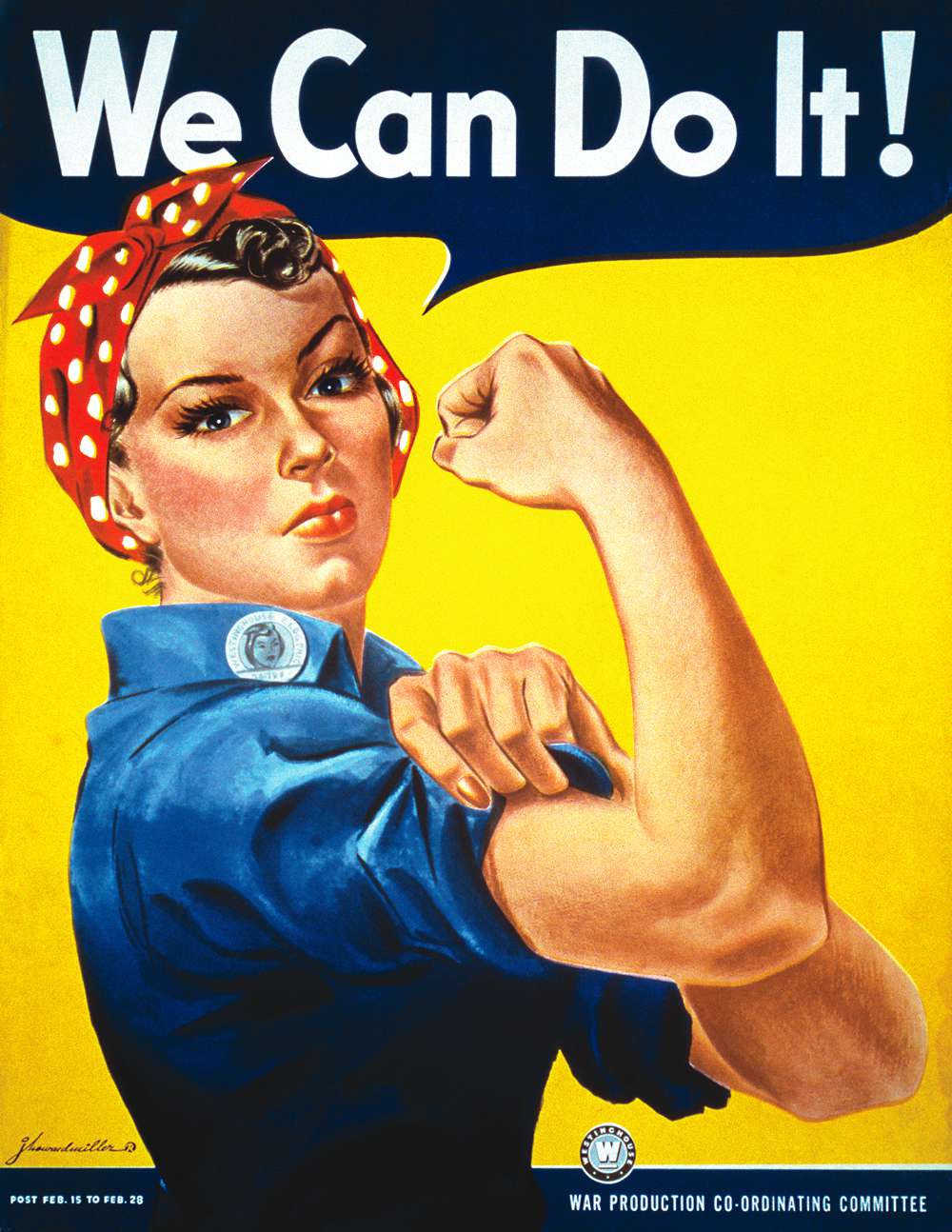
The iconic "Rosie the Riveter" poster, created by J. Howard Miller in 1943 for Westinghouse Electric, became the face of this movement. Featuring a woman in a red polka-dot bandana flexing her bicep with the caption "We Can Do It!", the image symbolized female empowerment and capability. Yet beneath the empowering imagery lay a complex economic transformation that would permanently alter the American family structure.
Propaganda as Persuasion: The Government's Strategic Campaign
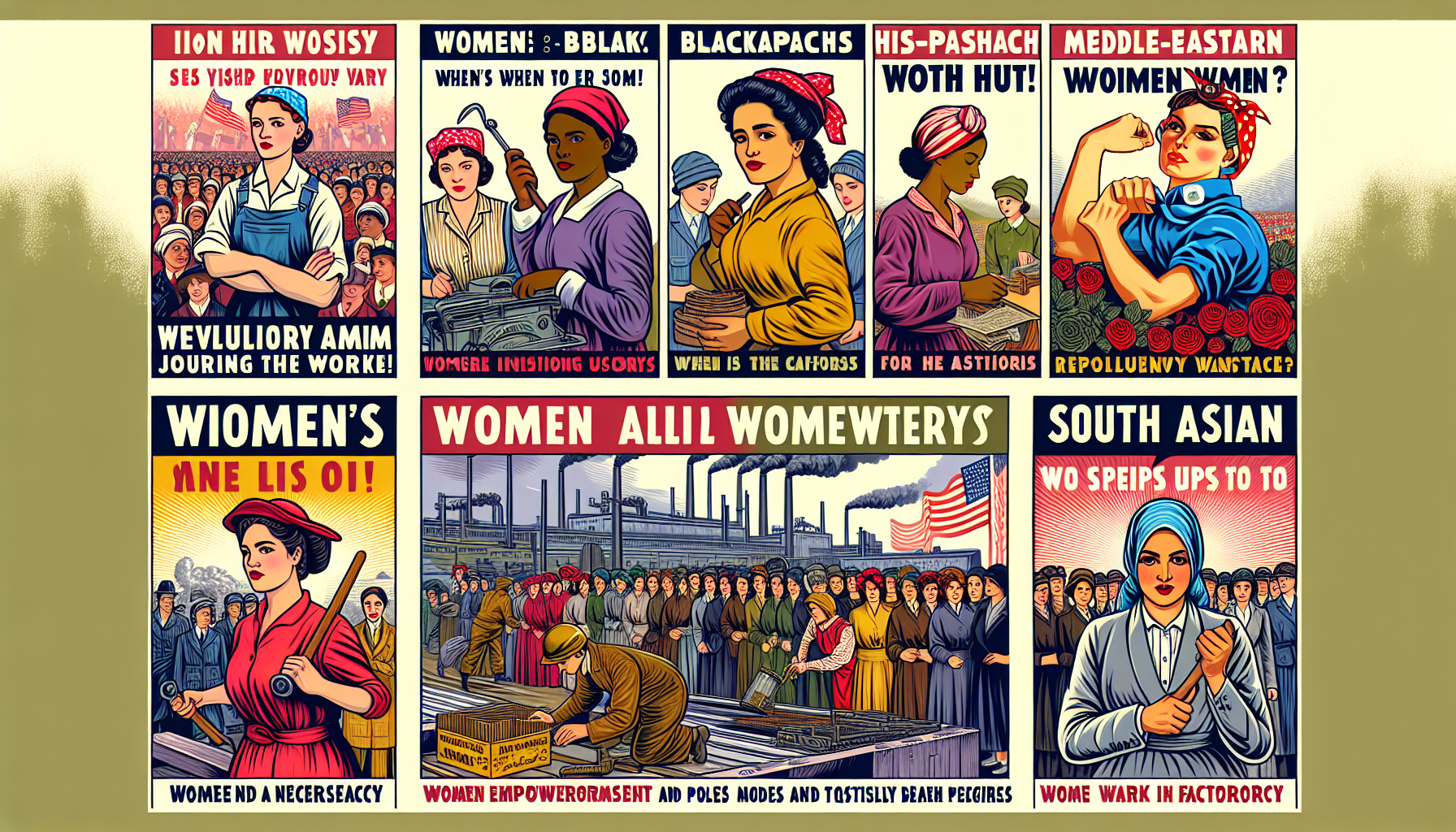
The U.S. government, through the War Advertising Council and the Office of War Information, orchestrated a sophisticated propaganda campaign targeting housewives and mothers. Posters, newspaper advertisements, radio broadcasts, and newsreels presented factory work not merely as a patriotic duty but as a natural extension of women's domestic capabilities.
One poster from 1942 proclaimed: "The More Women at Work, The Sooner We'll Win!" (National Archives, Record Group 44). Another depicted a mother holding her child with the text: "I'm Proud... my husband wants me to do my part" (Library of Congress, LC-DIG-ppmsca-13561). These images strategically framed women's workforce participation as temporary, patriotic, and supportive of their husbands and sons fighting abroad.
Newspaper articles of the era reflected this messaging. The New York Times reported in September 1943: "Women must fill the gaps in our production lines...they are needed in every industry" ("Women Workers Vital to War Effort," September 12, 1943). The Saturday Evening Post featured stories of housewives mastering welding torches and assembly lines, always emphasizing their continued dedication to family and femininity.
Empowerment Versus Economic Necessity
While propaganda posters presented an empowering narrative of capable women contributing to victory, the reality was driven by stark economic necessity. By 1943, approximately 310,000 women worked in the aircraft industry alone, representing 65% of the industry's total workforce (U.S. Department of Labor, "Women in Industry," 1944). Overall, women in the workforce increased from 27% in 1940 to 37% by 1945.
The messaging carefully balanced traditional gender roles with industrial needs. A 1944 recruitment poster showed a woman in work clothes with perfectly coiffed hair and makeup, captioned: "She's a WOW (Woman Ordnance Worker)" (National Museum of American History, Smithsonian Institution). This imagery reassured society that women could work in factories without sacrificing their femininity or maternal nature.
However, the government's true motivations became evident in classified memoranda. A 1942 War Manpower Commission document stated: "The maximum utilization of women workers is essential to winning the war" (National Archives, RG 211). The language focused on productivity metrics, not women's rights or empowerment.
The Post-War Reversal and Its Consequences
As World War II ended, the government's messaging dramatically shifted. New propaganda campaigns encouraged women to return home, making way for returning servicemen. A 1946 article in Good Housekeeping titled "Women Must Return to the Home" argued that female factory workers threatened family stability and men's employment prospects.
Yet the economic reality had fundamentally changed. Women had tasted financial independence and workplace skills. Many families had adjusted to dual incomes. According to the U.S. Census Bureau, despite pressure to leave, women's workforce participation dropped only to 32% by 1948, remaining significantly higher than pre-war levels.
From Temporary Measure to Permanent Transformation
The long-term consequences of wartime propaganda extended far beyond the 1940s. What was presented as temporary patriotic duty evolved into economic necessity for many families. Post-war inflation, rising consumer expectations established during wartime prosperity, and the growth of suburban living with its associated costs made dual incomes increasingly essential rather than optional.
By the 1960s and 1970s, economic factors had solidified the two-income family model. A 1973 study by the Bureau of Labor Statistics noted that families increasingly required two incomes to maintain middle-class status ("Working Women and Family Income," BLS Report 452, 1973). What began as wartime propaganda had fundamentally restructured American economic life.
The Legacy of Wartime Messaging
The wartime propaganda targeting women workers represents a pivotal moment in the content wars—when government messaging permanently altered social structures while presenting temporary necessity as empowerment. The posters, with their bold graphics and inspiring slogans, masked economic exploitation with patriotic duty.
Modern analysis reveals the duality of this campaign. Yes, it opened doors for women previously denied opportunities. The United Auto Workers research department noted in a 1944 report that women workers gained skills, confidence, and financial independence ("Women Workers in War Industries," UAW Research Report, 1944). Yet simultaneously, it established patterns where women's labor became economically essential to family survival rather than a choice.
The sophisticated propaganda techniques pioneered during World War II—emotional appeals, patriotic framing, visual symbolism, and repetitive messaging across multiple media platforms—established templates still used today. The transformation from dedicated moms to factory workers, marketed as temporary empowerment, became a permanent economic restructuring of American family life.
Conclusion: Propaganda's Enduring Power
The wartime propaganda campaign targeting women workers demonstrates how content and messaging can fundamentally reshape society under the guise of temporary necessity. What was presented as patriotic duty and female empowerment masked economic exploitation and permanent social transformation. The legacy persists today in the dual-income family structure that is no longer optional for most American households but an economic requirement.
Understanding this history illuminates how propaganda operates—not through obvious coercion but through appealing imagery, emotional manipulation, and the strategic framing of economic necessity as personal empowerment. The dedicated moms who became factory workers never truly got to choose whether to return home; economic forces set in motion by wartime policies had already decided for them.
Sources Cited:
-
National Archives, Record Group 44, War Advertising Council Posters, 1942-1945
-
Library of Congress, Prints and Photographs Division, World War II Poster Collection
-
"Women Workers Vital to War Effort," New York Times, September 12, 1943
-
U.S. Department of Labor, "Women in Industry During World War II," 1944
-
War Manpower Commission, Classified Memoranda, National Archives RG 211, 1942
-
U.S. Census Bureau, Labor Force Statistics, 1940-1950
-
Bureau of Labor Statistics, "Working Women and Family Income," Report 452, 1973
-
United Auto Workers, "Women Workers in War Industries," Research Report, 1944
content-wars-chapter-5-dedicated-moms-factory-workers-1771633438354.png