How AI is Replacing Traditional Design Workflows and Why Teams Must Adapt
The shift from wireframes to AI-powered development is revolutionizing speed to market—and leaving legacy teams behind
1.15.2025
The Traditional Design Workflow is Becoming Obsolete
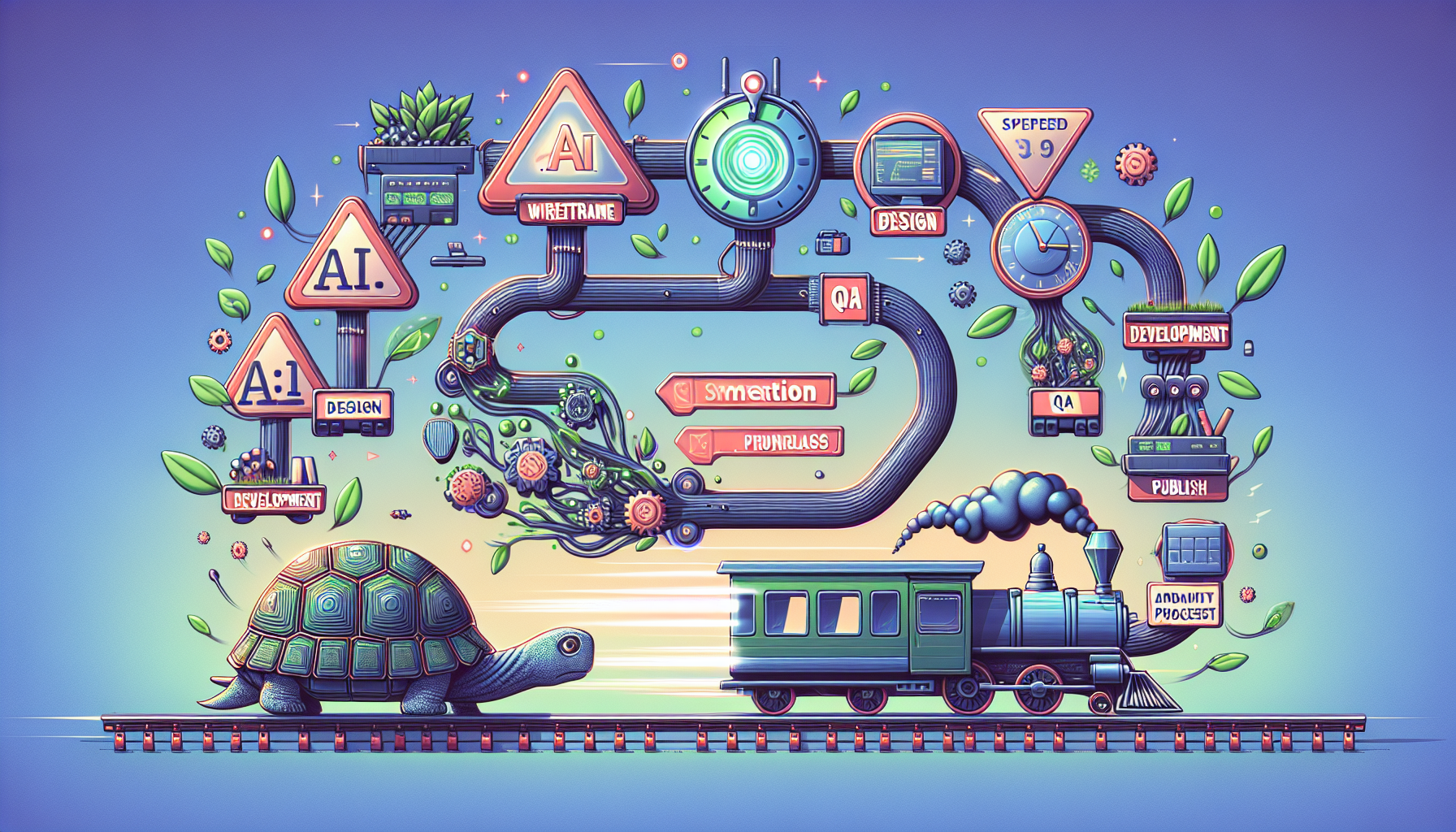
For decades, digital teams have followed a predictable path: wireframe, design, quality assurance, development, more QA, and finally, publish. This linear process, while thorough, often stretched projects across weeks or months. Each handoff introduced delays, miscommunications, and iteration cycles that compounded timeline pressures.
Today, that workflow is being disrupted by artificial intelligence—and the teams that fail to adapt are finding themselves at a devastating competitive disadvantage.
The New AI-Powered Workflow
The emerging AI-driven approach collapses the traditional pipeline into four streamlined stages: AI generation, development, quality assurance, and launch. Instead of spending days on wireframes and weeks on pixel-perfect mockups, teams are now using AI to generate production-ready code, design systems, and content simultaneously.
This isn't about replacing human creativity—it's about eliminating bottlenecks. AI handles the repetitive, time-consuming tasks that previously required multiple specialists and handoffs. Developers receive structured, clean code. Designers focus on strategic brand decisions rather than producing endless redlines. QA teams validate once instead of multiple times across design and development phases.
The Speed Advantage is Undeniable
The quantitative impact is staggering. Projects that previously required 8-12 weeks can now launch in 2-3 weeks. Feature iterations that took days now take hours. This velocity advantage compounds over time—teams shipping faster can test more ideas, respond to market changes quicker, and capture opportunities that slower competitors miss entirely.
Consider the competitive scenario: Company A uses traditional workflows and ships a new product feature every quarter. Company B adopts AI-powered workflows and ships every three weeks. Within a year, Company A has launched four iterations while Company B has launched sixteen. The learning, optimization, and market positioning advantages are insurmountable.
Why Resistance is Dangerous
Many teams resist this transition, citing concerns about quality, control, or the learning curve of new tools. These objections are understandable but ultimately misguided. AI-powered workflows don't sacrifice quality—they redirect human expertise toward higher-value validation and strategy rather than mechanical execution.
The real risk isn't in adopting AI too quickly; it's in adopting too slowly. Markets reward speed. Customers expect rapid innovation. Competitors using AI-powered workflows are already capturing market share, talent, and investor confidence while traditional teams debate whether to change.
The Adaptation Imperative
Teams must recognize that this shift is not optional. AI-powered workflows represent a fundamental change in how digital products are built—similar to the shift from print to digital, or from desktop to mobile. Organizations that treated those transitions as optional are no longer competitive. The same fate awaits teams that view AI integration as experimental rather than essential.
Adaptation requires investment in new tools, training, and process redesign. It demands that leadership champion change and that teams embrace discomfort during the transition. But the alternative—maintaining legacy workflows while competitors accelerate—is far more costly.
Practical Steps Forward
Teams ready to transition should start with pilot projects that test AI-powered workflows on non-critical initiatives. Identify bottlenecks in current processes where AI can eliminate handoffs or accelerate production. Invest in training that helps designers, developers, and QA specialists understand how their roles evolve rather than disappear.
Measure outcomes rigorously. Track time-to-market, iteration speed, and team satisfaction. Use data to refine the new workflow and demonstrate value to stakeholders who may be skeptical.
Most importantly, recognize that this transformation is already underway. The question isn't whether AI will replace traditional design workflows—it's whether your team will lead the transition or be left behind by it.
The Competitive Reality
In twelve months, the gap between AI-enabled teams and traditional teams will be measurable in shipped features, market responsiveness, and customer satisfaction. In twenty-four months, it will be reflected in market position, revenue growth, and organizational relevance.
Teams have a narrow window to adapt before the competitive disadvantage becomes irreversible. The technology is mature, the workflows are proven, and early adopters are already demonstrating dramatic advantages. The only remaining question is which side of this transformation your team will be on.
how-ai-is-replacing-traditional-design-workflows-1771863661925.png